Why should we bring back the beaver?

The reintroduction of the Eurasian beaver is a topic much debated across Europe and the UK, given its effects as an ecosystem engineer in rivers and streams. The species, which used to be widespread across England, Scotland and Wales, became extinct in the 16th century after widespread hunting (Countryfile, 2018). However, in recent years it has been suggested by academics and conservationists alike that the influence of beavers on water systems could be vital in restoring degraded wetland ecosystems.

A photogenic beaver. Source: Countryfile.com

Firstly, a quick introduction on the species. Beavers are best known for their long teeth and their construction of dams in streams and rivers, made by coppicing trees such as hazel and willow. The last wild beaver was killed in Britain some time in the 16th century, with its European cousins last spotted around the 18th century – beavers were prized for their fur and meat, but also for their castoreum, a substance which they used to scent mark their territory, which humans then collected for perfume (!) (RSPB). In 2016, beavers were given native status in Scotland, allowing those individuals which had already been released (legally or illegally) to spread (The Guardian, 2016). This news has received a mixed reception; many believe that it is beneficial to rewild a species which was once native to the area, but others fear a risk to fisheries – with dams potentially preventing the migration of commercially important fish such as trout and salmon (Countryfile, 2018).

The impacts of beavers on rivers and streams, and particularly their dams, are relatively well-studied. Beavers can build dams over 1m high, using stripped and coppiced vegetation to do so. They do this to create deep pools of water, which can be used as refuges (beavers prefer to move in water rather than on land), and to refrigerate food stores (Countryfile, 2018).

“The most significant geomorphic impact of beavers results from their dam building ability and the consequent impoundment of large volumes of water and potentially associated sediment and nutrient accumulation in ponds” – Puttock et al., 2018

The act of coppicing (or cutting down) trees to build these dams has a multitude of ecological benefits. Beaver coppicing has been shown to allow light to permeate through the woodland easier, and increase the availability of soil nutrients (Rosell et al., 2005). It can also reverse riparian (riverside) vegetation succession, creating an environment suitable for early successional species (Rosell et al., 2005), which affects levels of in-stream vegetation and therefore algal and macroinvertebrate assemblages. Changing the vegetation density of the riparian zone can also enhance waterfowl nesting cover adjacent to ponds (Rosell et al., 2005).

Beaver dams

According to a literature review by Kemp et al. (2012), “the most frequently cited benefits of beaver dams (are) increased habitat heterogeneity, rearing and overwintering habitat and invertebrate production”. An example of how this works, is illustrated by Rosell et al. (2005) – the woody debris which beavers collect for dam building can lead to much greater habitat heterogeneity (that is, variability in habitat types), which then leads to the creation of a greater number of ecological niches to be filled by multiple macroinvertebrate species. The scale of beaver activity can also change the morphology of a water course, forming deep pools behind dams, and altering water flow. But the benefits of dams can also be felt by mammals – the meadows which beavers can create through changing vegetation are reportedly used by white-tailed deer, moose and bears across North America, and beaver ponds offer improved hunting ground for bat species (Rosell et al., 2005).

Beaver dam across a river. Source: http://www.newswise.com

In terms of landscape improvements, a 2018 study found that beaver ponds, which accumulate sediment through the slowing of water flow, may help mitigate the effects of agricultural soil erosion (Puttock et al., 2018). The damming and subsequent flooding of stretches of river has also been suggested to improve connectivity of flood plains and mitigate large floods. Dams can even help regulate nutrient levels – Puttock et al., (2018) recorded a reduction in downstream concentrations and loads of nitrogen, phosphate and suspended sediment during storm flows.

“Beavers, being ecosystem engineers, are among the few species besides humans that can significantly change the geomorphology, and consequently the hydrological characteristics and biotic properties of the landscape” – Rosell et al. (2005)

Reintroduction risks

Despite the potential benefits that reintroducing beavers to our waters might bring, many people remain sceptical at best, or afraid at worst. This fear is founded on three main concerns: firstly, that their dams impede fish migration and will subsequently destroy commercial and recreational angling, secondly that they carry the lethal tapeworm Echinococcus multilocaris (which can spread to dogs and people) or other diseases, and thirdly that beaver dams will lead to flooding.

The impacts of dams on the migration of fish have been intensively studied (Kemp et al., 2012). Beaver dams are an obvious barrier in a stream which can alter fish movement. However, it has been found that this only significantly effects fish under low water flow conditions – fish were seen congregating behind dams under abnormally low flow conditions in Nova Scotia, Canada, but there was no recorded effect under average or above-average flow (Kemp et al., 2012). As well as this, beavers rarely construct dams on large rivers, so do not significantly prevent fish migration in these instances. The effect of these dams on amphibians has also been studied: Rosell et al. (2005) found no significant difference in species richness or abundance between dammed and un-dammed streams, and in fact found some species only on rivers with large beaver dams. The extent to which fish passage will be blocked by beavers therefore depends greatly on water flow regime, as well as the size of the river and of the dam – but with these considerations, it is still unlikely that fish passage will be significantly negatively affected.

According to a 2017 news story published by The Telegraph, members of the National Union of Farmers Scotland have argued against the reintroduction of beavers, on the grounds that they spread disease and can negatively affect other species. These diseases include the aforementioned tapeworm, but also the parasite Giardia lamblia, a parasite which can live in many mammals (including humans). However, there is a very low incidence of Giardia in Norway (where large populations of beavers currently reside), meaning there is a low risk of spread by beavers, according to the Scottish Wildlife Trust.

But do beavers cause flooding? According to many studies, the presence of beavers and their wily water-redirecting ways can allow up to 40x the amount of water to be stored on a wetland (BBC, 2014) compared to a beaver-free area. They can also keep water in upland regions, meaning that water is more gradually released, causing less damage downstream. Beavers can help prevent flooding by decreasing peak discharge and stream velocity (Rosell et al., 2005). The creation of meandering rivers also reduces flow, and has the side effect of cleaning spawning gravels for fish (Countryfile, 2018).

Summary

Are we likely to see beavers in the wild in the near future? European legislation (the EU Habitats Directive 92/43/EEC) requires that habitats should be assessed for the reintroduction of species including the Eurasian beaver to their once native ranges. Some reintroductions have already taken place around the UK. For example, the River Otter in Devon is now home to a population of around 30 beavers, though nobody quite knows how they got there (Crowley et al., 2017). In 2015, this beaver population became a “trial population” – government plans to remove them were rebutted by the county’s Wildlife Trust, allowing them to remain there unharmed.

 In 2009, Britain’s first official (legal) beaver trial was initiated in Knapdale Forest, Scotland. A huge step forward for pro-rewilders, the trial has been extensively monitored and managed by the Scottish Wildlife Trust and its partners to ensure all beavers released are healthy, disease-free and can go on to further increase the local population. In order for beaver reintroductions to become more frequent, it is imperative that the public supports them – the fate of these charismatic animals in the UK therefore depends on public opinion and cooperation with the wildlife organisations responsible for the management of these trials.

“Maintaining positive public opinion is an essential component of long-term success of any reintroduction program” – Kemp et al., 2012

References

Countryfile (2018) Guide to Britain’s beavers: history, reintroduction and best places to see. [online] Available at: https://www.countryfile.com/news/guide-to-britains-beavers-their-history-reintroduction-and-where-to-see/ (accessed: 20/07/2019)

Crowley, S.L., Hinchliffe, S. & McDonald, R.A. (2017) Nonhuman citizens on trial: The ecological politics of a beaver reintroduction. Environment and Planning A: Economy and Space49(8), pp.1846-1866

Kemp, P.S., Worthington, T.A., Langford, T.E., Tree, A.R. & Gaywood, M.J. (2012) Qualitative and quantitative effects of reintroduced beavers on stream fish. Fish and Fisheries13(2), pp.158-181

Puttock, A., Graham, H.A., Carless, D. & Brazier, R.E. (2018) Sediment and nutrient storage in a beaver engineered wetland. Earth Surface Processes and Landforms43(11), pp.2358-2370

Rosell, F., Bozser, O., Collen, P. & Parker, H. (2005) Ecological impact of beavers Castor fiber and Castor canadensis and their ability to modify ecosystems. Mammal review35(3‐4), pp.248-276

RSPB (n.d.) Beaver reintroduction in the UK. [online] Available at: https://www.rspb.org.uk/our-work/our-positions-and-casework/our-positions/species/beaver-reintroduction-in-the-uk/ (Accessed: 20/07/2019)

Scottish Wildlife Trust (n.d.) FAQ: Do beavers transmit disease? [online] Available at: https://www.scottishbeavers.org.uk/beaver-facts/beaver-trial-faqs/do-beavers-transmit-disease/ (Accessed: 20/07/2019)

The Guardian (2016) Beavers given native species status after reintroduction in Scotland. Available at: https://www.theguardian.com/environment/2016/nov/24/beavers-native-protected-species-status-reintroduction-scotland (Accessed: 20/07/2019)

The Telegraph (2017) Beavers are back and thriving but not everyone is happy. [online] Available at: https://www.telegraph.co.uk/news/2017/01/22/beavers-back-thriving-not-everyone-happy/ (Accessed 20/07/2019)

BBC (2014) Who, What, Why: Do beavers prevent flooding? [online] Available at: https://www.bbc.co.uk/news/blogs-magazine-monitor-26122318 (Accessed: 20/07/2019)
Fire, forests and their forgotten history

Fire is a vital process in natural systems, providing structure, disturbance and change across ecosystems from heathlands to forests. It is integral to understanding the composition of forests worldwide, as it dictates vegetation types (with frequent fires driving a shift to more fire-resistant species) and subsequently the faunal species which live with them. Fire is also an important management technique, and has been used for thousands of years to manipulate the landscape according to human need.

Ancient fire regimes and management are best understood by using paleoecology, the study of past environments and the organisms which supported them. Long-term data from pollen and charcoal records, historical accounts and more recently, satellite data (Whitlock, 2010), are all ways in which historical fire regimes can be analysed. With its clear link to climate (Hallett & Walker, 2000), understanding past fire regime is particularly important today, when facing unprecedented global climate change. This essay will outline the importance of long-term records in determining current and future management of the ecosystems most affected by fire.

Where once landscapes comprised patches of woodland and open land, a legacy of no burning has allowed these woodlands to fill in, making them more prone to fire, pests and increasing the spread of disease.

Successful management for fire requires baseline information, to determine the natural variability in an ecosystem, and to manage this variability within acceptable limits. The ‘equilibrium theory’ claims that ecosystems remain stable because of the interacting factors which can affect them (Gillson, 2015). However, for most ecosystems, fluctuation and variability are the norm, rather than a condition of no change over time. To illustrate this, imagine the sea. The height of the sea doesn’t remain constant each day (even with calm weather), but instead fluctuates with wave action. In the same way, it is impossible that the amount of fire an area may receive within a given time period will be constant over time, as it fluctuates. It is these fluctuations, which form a range of acceptable variability, which are important to consider.

When you recognise that stability and constancy in natural processes is not the norm, static management (i.e. responding the same way to a change in an environmental variable) becomes inappropriate. This is best shown with the example of fire suppression across the United States during the 1960s-1980s. Since the historical “Big Burn” of 1910, fire stopped being seen as a natural process and instead was treated as a threat – as a result, 98% of all fires across the USA were put out before reaching 120ha in size, a complete shift from the natural use of fire to suppress vegetation traditionally used by Native Americans. This changed the way in which fire interacted with the environment, by allowing trees to grow in high densities, closely packed together with no natural fire breaks (previously burned areas which could not be burned again, thus preventing fire spread), so that when a fire occurred it rapidly became uncontrollable. This legacy of fire suppression, rather than fire management (managing fires to be within natural limits of variability), has led to the rapid increase in “megafires”, leading to greater environmental and human damage.

Bestland Air Ltd.: FOREST PROTECTION SERVICES
Aerial fire bombing using water, fire retardants and flame inhibiting chemicals to control a megafire. Source: bestlandair.com

Charcoal

The main way to generate baseline information for better fire management is to study what has happened in the past using charcoal records. Charcoal are the fragments of organic matter which get preserved in sediment as they are deposited – they range in size, with microcharcoal often being used as a proxy for fire from longer distances, compared to the larger charcoal particles which are deposited much closer to the burn site. In a study by Marlon et al. (2008), charcoal records from 6 continents were combined, to demonstrate the link between fire, climate and human management. They found that burning decreased overall between the period of AD1-1750, before rapidly increasing between 1750-1830, associated with population rise and agricultural conversion of land. It then fell again until around 1970, which has been associated with fire suppression over the 20th century.  The most recent time period saw another increase in burning across the tropics, potentially associated with climate warming and increasing aridity. This study illustrates the usefulness of charcoal fragments as a proxy for global changes in fire regime, but also the fact that climate is the first driver for changes in fire frequency and biomass burned.

Accumulated fuels in dry forests need to be reduced so that when fire occurs, rather than “crowning out” and killing most trees, it is more likely to burn along the surface at low-moderate intensity” – North et al., 2015

A study by Gillson (2004) looked at the relationship with fire and the savanna ecosystem, finding that transition into a wooded state (which occurs on cycles of around 200 years) is largely determined by the positive feedbacks surrounding herbivory and fire pressures. This has an important effect on management, as it shows that there is more than one “natural” state for a savannah ecosystem, and to prevent fire from dictating which state would be an unnecessary intervention. Both these studies demonstrate ways of understanding natural fire variability, to inform current management.

Pollen

Another long-term proxy useful in determining fire regime, is pollen. When pollen is preserved in sediments, it captures a snapshot of the vegetation assemblage at a point in time. As such, a shift in vegetation abundance (in response to large fire events) or in type (in response to changing frequency of fires), can be used to indicate past fire regime. One study in Kootenay National Park, Canada, used this technique to demonstrate that the forest was becoming more closed, with dense, flammable canopies as a result of fire suppression (Hallett & Walker, 2000). Another example of vegetation change recorded as a response to fire, is in the Sierra Nevada, where increasing fire frequency caused a shift to lodgepole pine trees at high altitudes (Gillson, 2015).

Pollen under a microscope.

This effect is observed across many areas where fire suppression is observed; as fires are suppressed, trees are not removed from the ecosystem, causing growth and increased forest density. This allows forest fuels to build up as they are not reduced through the action of small-scale, regular fires, meaning that the fires which do occur are large and dangerous (often uncontrollable, as seen in the Californian fires of 2018).

More recently, new techniques have surfaced to study fire regime. These include the use of satellite imagery, which was incorporated into a study by Andela et al., 2017, who found a 25% decrease in burning over the past 18 years. The use of satellite imagery is a new technique, so might not be described as a long-term dataset, however it is still interesting to consider that in the future, this technique, which involves looking at burned area across a study site, might lead to changes in management.

Conclusion

To summarise, a number of paleoecological techniques can be used to study fire regime, from looking at pollen, charcoal, fire scars on trees, historical records and potentially even satellites. The main implications for modern management are as follows:

  1. Paleoecological data can show the natural variability of an ecosystem in terms of fire frequency – management should act within this variability, as was done traditionally by the Native Americans (Everett, 2008)
  2. Long-term data can show the influence of humans in fire regime, to act as historical lessons from the past e.g. fire suppression techniques and their subsequent increase in large-scale dangerous fires
  3. Vegetation changes recorded in the past can give an indication of the natural ecosystem state, as it would be maintained without humans – acting as a target for future management.

The solution may come from a revision of the present forest and fire management strategies… focusing on monitoring” – Michetti & Pinar, 2019

References

Andela, N., Morton, D.C., Giglio, L., Chen, Y., Van Der Werf, G.R., Kasibhatla, P.S., DeFries, R.S., Collatz, G.J., Hantson, S., Kloster, S. & Bachelet, D. (2017) A human-driven decline in global burned area. Science, 356(6345), pp. 1356-1362

Everett, R.G. (2008) Dendrochronology-based fire history of mixed-conifer forests in the San Jacinto Mountains, California. Forest Ecology and Management256(11), pp.1805-1814

Gillson, L. (2004) Evidence of hierarchical patch dynamics in an East African savanna?. Landscape Ecology19(8), pp.883-894

Gillson, L. (2015) Biodiversity Conservation and Environmental Change: using palaeoecology to manage dynamic landscapes in the Anthropocene. OUP Oxford.

Marlon, J.R., Bartlein, P.J., Carcaillet, C., Gavin, D.G., Harrison, S.P., Higuera, P.E., Joos, F., Power, M.J. & Prentice, I.C. (2008) Climate and human influences on global biomass burning over the past two millennia. Nature Geoscience1(10), p.697

Michetti, M. & Pinar, M. (2019) Forest fires across Italian regions and implications for climate change: a panel data analysis. Environmental and Resource Economics, 72(1), pp.207-246

North, M.P., Stephens, S.L., Collins, B.M., Agee, J.K., Aplet, G., Franklin, J.F. & Fulé, P.Z. (2015) Reform forest fire management. Science, 349(6254), pp.1280-1281

Whitlock, C., Higuera, P.E., McWethy, D.B. & Briles, C.E. (2010) Paleoecological perspectives on fire ecology: revisiting the fire-regime concept. The Open Ecology Journal3(1)

Pleistocene Rewilding: What is it?

Pleistocene rewilding describes the theory of restoring Pleistocene habitats back to their original state (at around 11,000 years ago), by reintroducing the megafauna which maintained them. The end Pleistocene saw huge megafaunal extinction (loss of 97 of the 150 megafaunal species between 50kyr and 10kyr, Barnosky 2004). This period of extinction has been linked to several causes, including disease, blitzkrieg (high killing and overexploitation), sitzkreig (associated human interference with fires etc.), climate, and meteorite explosion (Sandom, 2014). However, it has recently emerged that the most likely cause of these megafaunal extinctions lies with direct human action; Sandom (2014) found that the number of extinctions globally increased with human interaction, and was lowest where early humans and megafauna evolved together over a longer period of time (sub-Saharan Africa). It was also shown that there is only a weak link to climate change across the extinction period, one which can only be observed across Eurasia.

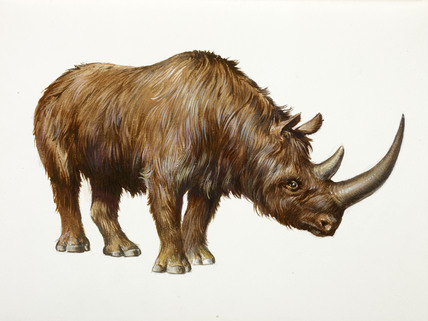
Woolly mammoths, woolly rhinos and tigers- three examples of megafaunal species which would have roamed across Northern Europe during the Pleistocene.

The idea of Pleistocene rewilding arose as a way to restore these “natural” habitats, and to repair the damage done by our ancestors. Because most of the species maintaining the habitats targeted for rewilding have become extinct, proxy organisms (stand-ins for extinct species)are used to fulfil the same ecological niche as the extinct organism (Zimov, 2005). For example, translocation of the African elephant into North America has been suggested to replace the mammoth which once roamed there during the Pleistocene (Donlan, 2006). But how realistic and feasible is this plot?

Why support rewilding?

In 2006, Donlan et al. published a paper which highlighted the potential benefits of rewilding. They claimed that as humans we have a moral obligation to restore the habitats that our ancestors once decimated, and that the most feasible way to do so is by introducing genetically related species to replace the functions of other organisms on the top trophic levels, which have been lost. As well as the moral incentive to restore these ecosystems, the study outlines other perceived benefits of the strategy, some being economic. Restoring past habitats would encourage funding into conservation and greater revenue from ecotourism – for example, when wolves were re-introduced into Yellowstone National Park in North America, an economic benefit of $9 million was recorded, compared to a societal cost of only $0.5-0.9 million (Donlan et al 2006). It is suggested that this money can then be re-invested into habitat conservation, creating further rewilding projects in a positive-feedback cycle.

The theory has also been supported on ecological grounds. A lot of pro-rewilding researchers justify restoring natural ecosystem processes and biotic interactions as a key to restoring lost habitats, and that restoring the top-predators, such as the cougar across America in place of the American tiger, would lead to a trickle-down trophic cascade effect. For example, wolves were reintroduced across Yellowstone to control populations of deer which had become unsustainably high in some natural parks. Some of the species suggested to make good replacements are themselves priorities for conservation – African elephants (as a proxy for the mammoth) are of high conservation importance, and it has been suggested that translocating these species to other continents for the purpose of habitat management may improve genetic resources across the globe and thus the genetic viability of the population (Donlan, 2006).

Does it work in practice?

There are examples of Pleistocene rewilding in practice, which could be justified as successes. The first, and most well-known, is the Pleistocene Park established in Siberia in 1998 (Zimov, 2005). This park was established in order to reconstruct the mammoth steppe habitat, a rare habitat comprising grasses, once maintained by mammoth, woolly rhino and their associated predators. Bison have been introduced to restore the ecosystem; specifically, to prevent permafrost degradation, a key justification for the creation of the park (Zimov, 2012) – permafrost degradation leads to the release of potent greenhouse gases such as methane, therefore contributing to climate change. By introducing species which are not so distantly related from the original megafauna which would have roamed the region 11,000 years ago, the ecosystem has started to be restored to its previous state, with permafrost thaw reduced (Zimov, 2012).

Woolly rhino Facts, Habitat, Pictures and Range
Woolly rhino – what a cutie. Source: http://www.extinctanimals.org

Another Pleistocene Park has recently been established in the Netherlands, where Heck cattle have been introduced to replace extinct auroch species (Gillson, 2015). This example has been less of a success in terms of rewilding a natural landscape – primarily through the fact that no top predators were released into the environment to control the population of other organisms. This means that there is high human intervention in maintaining the landscape – management through shooting between 30-60% of cattle and leaving their carcasses for foxes and large birds of prey mimics the role of these predators, but at a high human labour expense (Gillson, 2015).

This example illustrates the first negative point to Pleistocene rewilding as a technique: the landscape is still heavily human managed in cases where socio-political conflict prevents release of desired top predators (Donlan, 2006). This kind of conflict is expected with the introduction of potentially dangerous species such as lions and cougars; when wolves were re-introduced to Yellowstone, there was huge outrage from the farming communities around the area, who perceived their cattle to be at risk.

Summary

Through careful management of these so-called “parks”, habitats can be restored to a pre-Pleistocene condition, however it has been suggested by numerous researchers that conservation money be best spent investing in refaunation, the restoration of extant species to their original geographic ranges (Rubenstein, 2006). This would be beneficial as ecosystem services which they provide will be restored, changing the habitats in which they are found. Furthermore, it would reduce the risk of negative consequences associated with introductions of species which did not evolve to the set of conditions in which they would be translocated, causing unexpected trophic interactions or spread of zoonotic disease (Rubenstein, 2006).

Rubenstein (2006) also makes the point that rewilding would not restore habitats to their Pleistocene condition, but instead into a hybrid past-present “Frankenstein ecosystem”. This was suggested on the basis that adaptation and evolution in the landscape has happened since the extinction of the megafauna, and that it cannot be expected that these habitats remain unchanged since the start of the Holocene. As such, it is inappropriate to introduce a species which is unfamiliar with the new, adapted conditions (such as vegetation changes) to try and force back the old ecological interactions which essentially occurred between completely different vegetation and species.

Besides the economic and ecological arguments, there is a certain element of practicality which cannot be overlooked – how does one translocate a population of large organisms between continents, and expect them to adapt to the new environment as if it were their old? This question seems to be skimmed over by pro-rewilders, who justify the economic benefits of the scheme over the potentially damaging implications for the translocated animals, in terms of welfare and disease spread.  For a process which aims to better protect species, and the habitats they create through their ecological relationships with other organisms, this seems counterintuitive.

To summarise, Pleistocene rewilding is an optimistic but somewhat desperate attempt at restoring past habitats, such as the mammoth steppe in Siberia, or savanna grasslands across the tropics. There have been past successes with rewilding; notably illustrated by the Pleistocene park in Siberia, or the breeding and subsequent release of specific species such as the Californian Condor, however the risks involved in translocating completely different species (or even, distantly related species) across continents to conserve them and their habitats. Not only is there the redistribution of important and limited conservation funding to a high-risk project, the likely spread of disease, altered trophic interactions and socio-political conflict associated with the technique make it infeasible in many locations. The process could be feasible if the ecological interactions of each proxy species were completely understood (Gillson, 2015), and if each area were assessed fully and comprehensively on a site-by-site basis. However, perhaps the conservation of existing trophic interactions with the landscape is a lower-risk and better ecologically justified method of restoring endangered habitats.

References

Donlan, J.C., Berger, J., Bock, C.E., Bock, J.H., Burney, D.A., Estes, J.A., Foreman, D., Martin, P.S., Roemer, G.W., Smith, F.A. & Soulé, M.E. (2006) Pleistocene rewilding: an optimistic agenda for twenty-first century conservation. The American Naturalist, 168(5), pp. 660-681

Rubenstein, D. R., Rubenstein, D.I., Sherman, P.W., & Gavin, T.A. (2006) Pleistocene park: does re-wilding North America represent sound conservation in the 21st century? Biological Conservation 132, pp. 232–238

Zimov, S.A. (2005) Pleistocene park: return of the mammoth’s ecosystem. Science308(5723), pp. 796-798

Zimov, S.A., Zimov, N.S., Tikhonov, A.N. & Chapin I.F.S., (2012) Mammoth steppe: a high-productivity phenomenon. Quaternary Science Reviews57, pp. 26-45

Gillson, L. (2015) Biodiversity Conservation and Environmental Change: using palaeoecology to manage dynamic landscapes in the Anthropocene. OUP Oxford.

What happened to the Easter Islanders?

“The person who felled the last tree could see it was the last tree. But they still felled it” – Bahn & Fenley (1992)

By AD 900, Easter Island, the most remote piece of land in the world, was first inhabited by Polynesian settlers. Around 500-600 years later, their society collapsed. The following article will discuss this civilisation, the potential reasons for its demise, and why it may be relevant to modern-day life.

Easter Island, or Rapa Nui, was found by Dutch explorers on Easter Day, April 5th, AD 1722. The most striking and well-known remnant of the ancient Islanders before this time is the Moai statues: these huge stone torsos stand up to 32ft high, representing high-ranking ancestors and leaders of the past – some of which wear Pukao, large slabs of red stone placed on top of the Moai to represent the crown of the clan leader. Remnants of these statues document the work of an advanced civilisation, capable of creating and raising such structures, believed to be a physical manifestation of social competition between clans.

The Easter Islanders were an organised society: upon transferring livestock and crop species to the island from Polynesia, agriculture intensified – archaeological findings indicate stone chicken houses with extra stones used as windbreaks to protect crops. Rocks were also used to make the soil more amenable for crop growth, by altering its moisture balance. Areas across the island were divided based on the valuable resources of each area; on the North coast, Anakena was known for its beaches, good for launching canoes, whilst other areas presented better fishing opportunity. The division of resources resulted in the division of people, with territorial clans initially remaining largely independent of each other. There was also social division between commoners and chiefs, inferred from archaeological findings of the size and structures of residences – commoners lived in smaller houses in more inland locations, when chiefs lived by the coasts where there was a more reliable source of food. However, when resources started to deplete, rival clans as well as members of the same clans became unified by their reliance on resources from elsewhere.

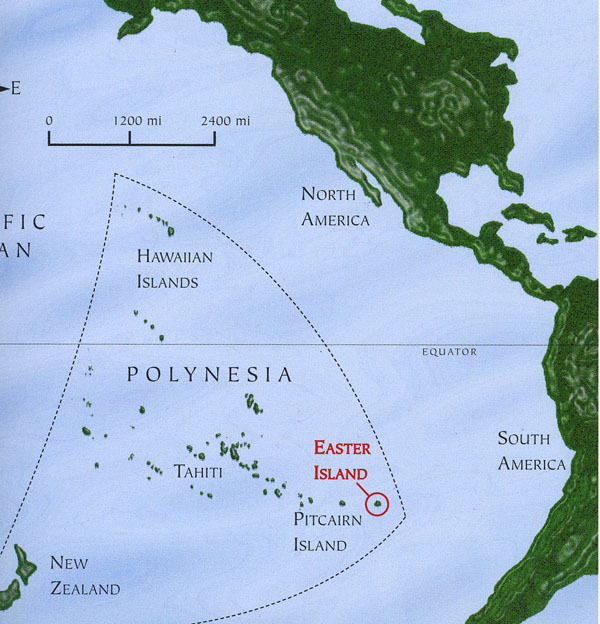
PZ C: island map
Where on Earth is Easter Island, I hear you cry – well, in the moddle of the ocean between South America and New Zealand, really. Source: blogspot.com

Similarities between this culture and that of the modern day are prevalent: a dependence on the surrounding environment, whether it be for forestry (for construction and industry), for food (fishing and agriculture) or for general life and well-being (e.g. resources to construct large, culturally important statues). Potentially then the fate of the Easter Islanders presents a warning to Western civilisations especially, where overpopulation, over consumption and poor environmental protection legislation is already leading to the widespread manipulation and degradation of our natural resources.

Why did the civilisation collapse?

Easter Island suffered almost the most extreme deforestation and consequent social and population collapse of any Pacific island, even though the Polynesians who colonized Easter colonized hundreds of other islands without wreaking such extreme impacts.” – Rollett & Diamond (2004)

The collapse of the Easter Island population occurred mysteriously between AD 1400-1680. Several causes have been implicated from a number of academics, without any definitive conclusion – however, each one leaves an important message for our modern-day society.

The first potential cause of the demise of the civilisation is climate. During the late Pleistocene (the geological epoch spanning from the Younger Dryas cold period at 2.6 million years ago, until around 11,700 years ago), the climate was dry and cool, with palm forest and grassland dominating the island landscape. The native palm forest was rapidly deforested, but not necessarily as a result of anthropogenic disturbance – the island was uniquely dry compared to other Polynesian islands, with low rainfall and subsequently poor soil nutrient restoration from volcanic dust, making the woodland regeneration difficult. It has therefore been suggested that these landscape shifts meant that the environment could no longer support the civilisation, leading to its collapse.

The second idea is that of self-inflicted environmental degradation – that as the island population multiplied, reliance on organised agriculture and fire led to poor land management and reduced forest cover. For example, has been proposed that the loss of the native palm tree on the island by 1400 AD could have been because of incessant logging to use timber as rollers for transporting Moai statues, and with increasing social competition and inter-clan rivalry, the production of these statues became evermore important. Alongside this is the introduction of rats to the island with the islanders – these may have prevented regrowth of forests by physically damaging seedlings and eating seeds. Hunter-Anderson (1998) contested these ideas, instead arguing that rats could have instead encouraged woodland regeneration, and that the infrequent use of wood to move the statues was not enough to justify the mass deforestation on the island.

Moai Statue. Source: http://www.easterislandtravelling.com

A third potential explanation for the loss of indigenous Rapa Nui people would be the introduction of European settlers, their animals and their diseases. How could the Easter Islanders, after surviving without intervention from other peoples, adapt to the huge changes and lifestyle disruption associated with the introduction of European discoverers?  Archaeological findings and reports from the initial Dutch explorers suggest mass social upheaval, conflict and disease after the colonisation of the island, with the population being reduced from many thousand to several hundred after the forced removal of islanders for slave labour.

These ideas provide explanations for the many aspects of Rapa Nui culture, and the discovery of this culture by Western powers, which may have led to the wiping out of native Easter Island population. It is important to recognise the assemblage of social and environmental impacts on this collapse, often referred to as an “ecodisaster”, to be able to apply these ideas to modern day civilisation – the collapse of Rapa Nui culture is a microcosm for the potential destruction of our planet, through changing climate, unsustainable resource use and conflict.

The delicate balance between the abundance of natural forests and our dependence on them is something which has been somewhat forgotten in modern day society: 18 million acres of forest are lost each year, being converted to agriculture for growing crops, a lot of which is not even consumed by humans but fattens cattle or is burned for biofuel. Half of the worlds tropical rainforests, where over 120 natural remedies can be found and used in traditional and modern medicines, have already been cleared to feed our ever-growing need of land. And conflict, such as the that between local people and illegal logging companies in Indonesia, threatens natural woodlands worldwide.

It is vital that the management of our global forest stocks now prioritises sustainable consumption of all forest resources. In recent years, this concept has been promoted by bodies such as the UN, which defines sustainable forest management as “a dynamic and evolving concept aims to maintain and enhance the economic, social and environmental value of all types of forests, for the benefit of present and future generations”. In order to avoid a self-induced ecodisaster like that which may have led to the demise of the Easter Islanders hundreds of years ago, it is crucial that the management of our natural resources is done in a sustainable way which benefits all.

References

Diamond, J. (2005) Collapse: How Societies Choose to Fail or Succeed. Penguin Publishing: United States.

Flenley, J & King, S.M. (1984) Late Quaternary pollen records from Easter Island. Nature 307, pp. 47-50

Rainbird, P (2002)  A Message for Our Future? The Rapa Nui (Easter Island) Ecodisaster and Pacific Island.  World Archaeology 33, pp. 436-451

Rolett, B. & Diamond, J. (2004) Environmental predictors of pre-European deforestation on Pacific islands. Nature 431, pp. 443-446

Kaplan, J.O. (2011) Holocene carbon emissions as a result of anthropogenic land cover change. The Holocene 21, pp. 775-791

Design a site like this with WordPress.com
Get started