Fishing down the food web – what is it and why does it matter?

A popular idea in marine conservation and fisheries management is that of “fishing down the food web”, first coined in a paper by Pauly et al. (2000). The phrase describes the observation that the average catch from global fisheries in 2000 was of a lower average trophic level than over the last 50 years prior. …

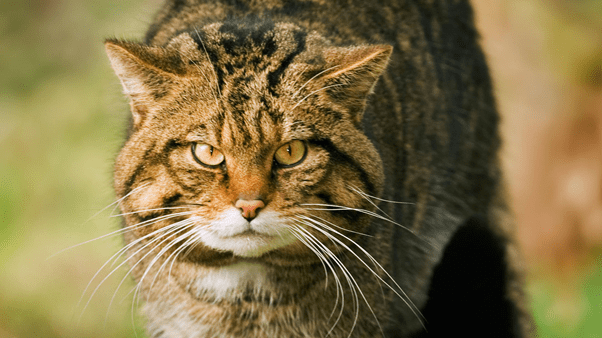
Captivity: Conservation of Scottish Wildcats

The Scottish Wildcat* (Felis silvestris grampia) represents the last surviving wild member of the cat family in Britain (Fredriksen, 2016). It is a famously elusive and untameable species (Gartner et al., 2014), which resembles the domestic tabby cat, with a large black-tipped bushy tail. It is among the most endangered species in Britain, with under …

Badger Culling

Badgers are charismatic, black-and-white striped mammals which share their scientific family with otters, weasels and ferrets, and are protected in the UK under the Protection of Badgers Act 1992 (Bennett & Willis, 2008). They live in underground setts, some of which have been found to extend from 20-100m or more, with the largest in the …

Palm Oil II: Consumer Choice

Welcome to the second part of this two-part special collaboration on palm oil (Part I here!). Both of these posts are a collaboration with fellow science blogger Beth from Green Ambition, so if you enjoy what you read here check out her site! In part one, we examined the reasons behind palm oil’s undeniable negative …

Palm Oil I: Friend or foe?

Welcome to this two-part special series on the impacts and production of palm oil. Both of these posts are a collaboration with fellow science blogger Beth from Green Ambition (https://greenambition.co.uk/) so if you enjoy what you read here check out her fantastic site! Introduction Over the last decade, palm oil has become the most widely …

How to solve a food crisis

A food crisis is a sharp rise in rates of hunger and malnutrition at a local, regional or global scale, for reasons which may include increased food prices or poor crop yield due to drought or flooding. There is a high probability that we are already facing the onset of a huge food crisis, as …

Ancient woodlands: why should we care?

Ancient woodland is an ecosystem in which more threatened wildlife than in any other UK terrestrial habitat dwells. Across Europe, ancient woodlands are rare, but can be found in the form of remnants of “wildwood” or primeval forests, such as the Białowieża Forest on the border between Poland and Belarus, which once spanned the European …

Why should we bring back the beaver?

The reintroduction of the Eurasian beaver is a topic much debated across Europe and the UK, given its effects as an ecosystem engineer in rivers and streams. The species, which used to be widespread across England, Scotland and Wales, became extinct in the 16th century after widespread hunting (Countryfile, 2018). However, in recent years it …

Fire, forests and their forgotten history

Fire is a vital process in natural systems, providing structure, disturbance and change across ecosystems from heathlands to forests. It is integral to understanding the composition of forests worldwide, as it dictates vegetation types (with frequent fires driving a shift to more fire-resistant species) and subsequently the faunal species which live with them. Fire is …

Pleistocene Rewilding: What is it?

Pleistocene rewilding describes the theory of restoring Pleistocene habitats back to their original state (at around 11,000 years ago), by reintroducing the megafauna which maintained them. The end Pleistocene saw huge megafaunal extinction (loss of 97 of the 150 megafaunal species between 50kyr and 10kyr, Barnosky 2004). This period of extinction has been linked to …

Design a site like this with WordPress.com
Get started