Best Books of 2021 (so far)!

I have been somewhat negligent of this blog for a few months so I thought I would drop a sneaky mid-year favourite books post, since everybody and their dog are putting these out online at the moment and I wanted to join in the fun. I’ve read lots of good stuff this year and am charging my way through my goal of 52 books in 2021 (currently at 34!). These three are the ones I could form intelligible thoughts about, but there are a few honourable mentions too.

Braiding Sweetgrass by Robin Wall Kimmerer 
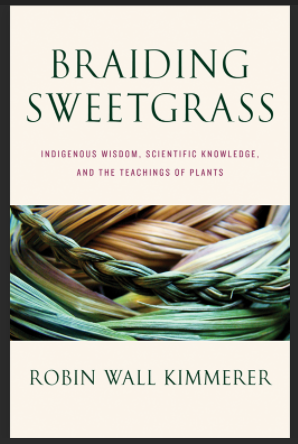
Braiding Sweetgrass is the feeling of lying in the woods looking up at the clouds and breathing deeply; the sight of butterflies landing on big flower heads and the smell of fresh tomatoes. I thought this book was sublime. The writing was wonderful – each chapter centred on another theme or way of thinking about the natural environment, often with heartfelt personal anecdotes and experiences weaved (or braided hehe) within. This book is a compilation of stories around Native American spirituality with regards to nature – how traditional thought around seeing plants as “non-human people” has allowed a greater appreciation and love for the environment, and has has implications for social and environmental wellbeing. 

“we must say of the universe that it is a communion of subjects, not a collection of objects”

One of my favourite chapters illustrated the idea that comes up frequently in this book, that “all flourishing is mutual”: Kimmerer tells the history of the “Three Sisters” planting technique (or companion planting), where corn is planted alongside climbing beans and squash in sets of threes. To summarise this strategy, corn is planted first and grows the tallest – it provides a tall pole around which beans, the middle sister, can grow, supporting both plants equally. Squash is the last of the three to grow, and grows strong broad leaves, which prevent pests from accessing the roots of all three plants. 

“Humans are viewed as the lesser beings in the democracy of species. We are referred to as the younger brothers of Creation, so like the younger brothers we must learn from our elders. Plants were here first and have had a longer time to figure things out”

Overall I would really recommend this book to anyone with an interest in the natural world, Native American beliefs and culture, botany, agriculture or even history. It was a wonderful read and I enjoyed it so much that I prioritised it over a fiction book I was reading at the same time – so that is saying something.

Night Circus by Erin Morgenstern
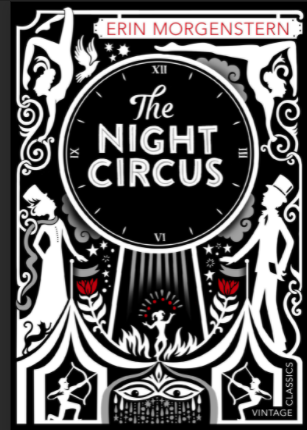
This book is getting so much hype online at the moment and for good reason in my opinion – this story about magicians in a magical night circus, was, dare I say, magical. I can’t really find another word that best suits it – The writing was wonderful, the plot was interesting and though I thought the characters could have done with a bit more padding out, the settings were so beautifully-described. I especially loved the relationships between the children, Poppet, Widget and Bailey – their friendship was so pure and was a nice tonic to the more complex, calculating adult characters. But above all the striking settings are what make this book so memorable. The Night Circus is complete escapism.

The plot follows multiple characters at once, who are all somehow involved in a mysterious night circus, which arrives without warning and in a random location around the world. It is cleverly formatted so that each chapter might jump back/forward a few years from the previous, which really rounds out the story – we get to live each year from several perspectives, and might learn the secrets of one character in a chapter set five years ago from another character in the present chapter. This might sound confusing, but don’t let the writing style put you off – if I can keep up with it, anyone can. 

The Final Empire by Brandon Sanderson

If Braiding Sweetgrass felt like lying in the woods on a summer day, this book felt like jogging through a city in the pouring rain. And it’s dark. And there are no people around. 

The Final Empire has got incredible reviews all over Goodreads for a reason – it is as brilliantly written story about a place where the poor are slaves to the rich, where people are watched over by men with steel spikes through their eyes, and where some individuals can burn metals within themselves to gain enhanced abilities – a handful of which come together in this book in order to overthrow the man who controls it all, the Lord Ruler.  

The world building, the characters, the pace of the plot – I loved everything about this book. Our main character Kelsier is a dreamer whose charisma and optimism draw people of all types to him, which is how we meet the charming but lazy Breeze, the calm managerial Dockson, and philosophical bodyguard Ham amongst many others. This is how we end up also following Vin, an orphan who is drawn to Kelsier for what he teaches her about being a “Mistborn”, a person who can use all of the metals available to gain super-human speed, strength or mind-influencing abilities. Vin’s character development in this story, her experiences undercover as an aristocrat, her friendship with Sazed and Kelsier and the unnerving setting all push this book to the top of my list this year.

 “There’s always another secret”.

As well as these top three books, I have also enjoyed The House in the Cerulean Sea by T.J. Klune, Song of Achilles by Madeleine Miller and Ready Player One by Ernest Cline. Let me know what your top books of the year so far were in the comments below. You can see all the other stuff I am enjoying and not enjoying particularly much by checking out my goodreads. Have a great week!
Reviewing the natural history books of 2021 (so far)

Hello friends! It’s me again after another hiatus… to talk about some non fiction books I have been reading lately! I am not typically a non-fiction reader and find it much slower going than fiction but in a vague attempt at keeping to the sciency-theme of this blog I will go through some here. My aim in general is to get through 52 books this year (and if you have any recommendations, please let me know!!), with a fair few non fictions chucked in for good measure. If you were interested at all, you can check out my goodreads (Annie Lev), or some of the fiction and non-fiction I got through last year here . So without further ado, let’s get into the books!

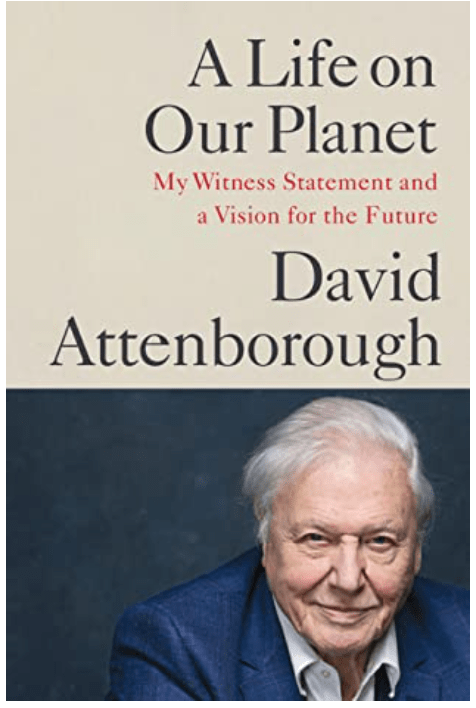
A life on Our Planet by David Attenborough

The much talked-about, much loved new David Attenborough book. He’s a great dude, isn’t he? This book was very engaging and of a nice length, seamlessly combining Mr Attenborough’s life experiences and adventures with the changes that our planet has undergone in the last 90 or so years. He gives a sweeping overview of what we as a species have done to our planet’s land and soils, skies, oceans and everything in between – it is a brilliant overview of most of the important stuff, which was engaging and kept the reader interested. It also had pictures, which is always appreciated, especially when they are of animals, forests and other such things.

Despite the cracking start, I felt that the concluding chunk of this book was a bit flakey and lacked impact. Maybe it was because Mr Attenborough, quite rightly, was making his point to the general, non-scientific audience, but I personally felt it was building up to a brilliant conclusion worth remembering, which missed the mark somewhat. But then again, what could David had said as a one-size fits all solution to the mess we have made anyway? Overall I would recommend this book to anyone – it’s vital information presented in a hesitantly optimistic way, and doesn’t have any unexplained scientific jargon either to confuse you. Or if you don’t like reading, there is a Netflix version of it, though I admittedly haven’t seen it (do I want to cry? I don’t think so).

“It is the story of how we came to make this, our greatest mistake – and how, if we act now, we can yet put it right.” – Sir David Attenborough, A Life on Our Planet

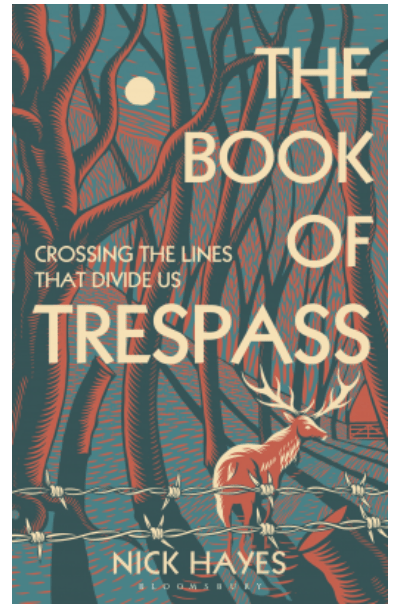
The Book of Trespass by Nick Hayes

This book completely blew my socks off! 

What a beautifully written biography of England’s countryside through the centuries. I anticipated this book to be an interesting, left-wing hippie-style wander (excuse the pun) around why we should have the right to roam around our country uninhabited, swim naked in all of the rivers and eat bark from whatever tree we so choose. 

This book was even better – a tour both geographically and temporally around Britain’s parks, great estates, rivers, forests, roads and just about everywhere else. Hayes’ writing combines his own personal ramblings through time and space, encounters with others (from wary wardens and pompous politicians to refugees in Calais) and personal thoughts with a deep understanding of how the ideas of possession, ownership and freedom developed over time. Throughout the book are also individual stories about certain cases or examples which just highlight the different points of each chapter. 

The vast majority of our country is entirely unknown to us because we are banned from setting foot on it. By law of trespass, we are excluded from 92 per cent of the land and 97 per cent of its waterways, blocked by walls whose legitimacy is rarely questioned. But behind them lies a story of enclosure, exploitation and dispossession of public rights whose effects last to this day.” – Nick Hayes, The Book of Trespass

I thoroughly enjoyed this book and gathered so much more than just some extra understanding of the countryside – from institutionalised racism, the deep theoretical stuff, British politics, corruption and freedom. I would highly recommend this book to anyone with an interest in how society came to be the way it currently is – there’s something in this for everyone.

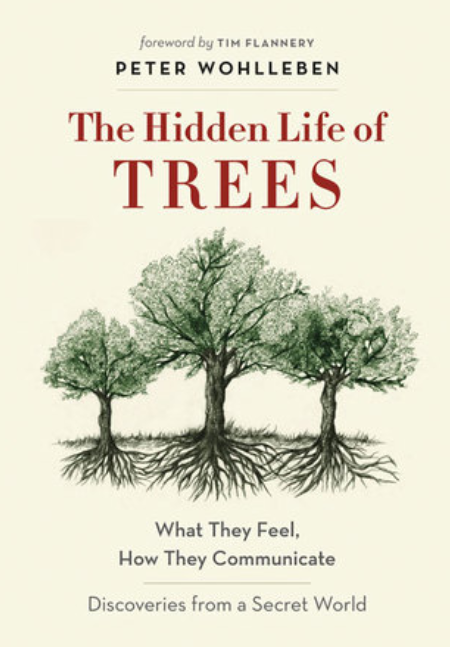
The Hidden Life of Trees by Peter Wohlleben

Yikes I did not like this book at all. So much so that I didn’t even finish it. This book is about trees (spoiler alert) and how they have adapted to survive over time, according to the different environments in which they live. There might have been more to it than that, but to be honest I became so bored after the first 60 pages I left it there.

I found the overly anthropomorphised take on trees very patronising and over-simplistic – It seemed to me that the author felt the only way to make us care about nature was to make it relatable. For example, by tugging on the heartstrings of what he must assume to be a very careless, self-absorbed reader by using words like “love” and “family” to describe trees. As if we couldn’t appreciate them for what they are. Trees. 

I also wasn’t a fan of the structure – the chapters were so short that as soon as Wohlleben started digging his teeth into a juicy new topic, he pulled them out again before having even a taste of the good stuff therein. Maybe I missed the point of this one, but I just really didn’t like it, and I certainly wouldn’t recommend it to anyone with a science background or a sciencey mind – it’s a bit too airy fairy for me!

In an attempt to further chug through some non fiction, I am now working through the audiobook of Bringing back the Beaver by Derek Gow. But after that, I have no plans – please send any recommendations my way on all things natural history, ecology and environment!

Veganuary 2021: One year on

Wow, a whole year has passed since Veganuary 2020. And now I am here to write about Veganuary 2021. And let me tell you, what a difference 12 months makes – especially when those 12 have been spent predominantly in isolation.

I started off last year’s post by explaining how bad at being vegetarian I once was. Thankfully, this is no longer the case- Veganuary 2020 was the perfect way to kick start last year, and I haven’t had a single piece of meat since Christmas 2019. Pretty chuffed with that! I spent most of the year cooking and learning new recipes, since I was lucky enough to be at home for the year whilst looking for a job. As a result, lockdown measures lasted so long that I got into the best shape of my life during the summer, eating all my beans and grains and roasted vegetables, and then get back out of shape again towards the tail end of the year (Christmas chocolate, anyone?).

But by the end of 2020 I had managed to procure my first full-time job, leave my family home, move away from almost everyone I know and most importantly learn how to make my own hummus. Having the time to spend on cooking and planning food vastly improved my diet as well as my appreciation for all things chickpea. Which is funny considering that last year I wrote “sandwiches in general are rubbish vegan when you don’t much like hummus” (Anna’s diary 12.01.20). Safe to say that girl has gone. She has been replaced by a girl who buys 4 tins of chickpeas every week to ensure she gets them into almost every meal.

2020 vegan Anna was eating beans, rice and lentil soup on repeat (as well as copious amounts of oreos – some things never change). 2021 vegan Anna owns cookbooks, an Instagram account for vegetarian and vegan food, and miso paste.  I’m not sure what to do with the latter yet, but baby steps. I have cooked pearl barley, 3 bean chillies, multiple kinds of soup – all hail the slow cooker – multiple types of curry, vegan gyros (the best of them all), butternut squash pancakes, pesto, dosas, baked oatmeal, quesadillas, flapjacks, udon noodles… The variety of plant-based recipes out there means that if you enjoy cooking, you can conjure up some delicious stuff. Plus cutting out dairy has the greater benefits, for me at least, of more energy, less body fat, shinier hair (that’s a new one!) and zero bloating. Also, it’s cheaper overall than buying meat and fish. Win!

A selection of some of my favourite makes this month – from top right vegan breakfast, spicy roasted sprouts, homemade pesto with pasta, lightly spiced pearl barley, apple and cinnamon bakes oats and roasted vegetables in garam masala.

Some foods have unfortunately been lost to me since getting Covid last March (change in taste and smell after an illness is called parosmia, which was in the news this week) – I can no longer stand the smell or taste of bell peppers for example, and onion and garlic was also totally out of the question for many months. Add this to my extreme hatred for the cooked mushroom, and yes, I still hate aubergines, and you would think that would limit the veggie options for dinner. But I was very wrong – I’m fairly sure this month has seen me cook the most new recipes than the whole 21 and a half years before it.

Last year, I summarised Veganuary 2020 with:

“Overall I have really enjoyed veganism – more for the effects on my body than the food itself” – Anna’s diary (27th January 2020).

This year, I will say that I didn’t miss a single thing, and feel brighter, lighter and happier for leaving meat and dairy behind. Plus my lactose intolerant bod is v pleased with the abandonment of cheese 😊 I’m definitely planning on carrying on throughout the year, which shouldn’t be too hard considering I don’t go out or see anyone ever for them to moan at me for this choice – something which happened a lot more last year. But however you spent your January, I hope it was a good one, and the start of maybe perhaps a slightly improved year? Time will tell! I will report back in 12 months time!

Here’s an updated list of the tastiest vegan things (expanding on last year’s):

  • Pearl barley – not even joking this is my new favourite meal
  • Linda McCartney’s vegan ¼ pounders (treat yourself, you won’t regret it)
  • Sweet potato in all its voluptuous forms
  • Garam masala is the best spice paste in the world, put it on your roast veg everyone
  • Udon noodles
  • Homemade pesto
  • HUMMUS

Also shout out to these books which have provided said delicious vegan foods:

Slow Cooker Vegeterian: Katy Holder

MOB Veggie: Ben Lebus

15 Minute Vegan on a Budget: Katy Beskow

The Green Roasting Tin: Rukmini Iyer

Read more about…

Veganism and health

Veganism and sustainability

Veganism and the economy

RANDOM

The books that took me through 2020

Hi guys! I know that I haven’t put anything new up lately due to me moving and getting a full-time job, however I thought I would do a little roundup of some of the books I have read this year. I have picked ones which I have particularly enjoyed/ found interesting, but there are loads more I would love to talk about (including the much-hyped Normal People by Sally Rooney, and all the Harry Potter books, oh yes)… let me know in the comments if you would like to read a part 2 with all the other books! Also, I read most of these books for free using Libby, the library app. I would 100000% recommend downloading this free app (all you need is a library card) as it will give you access to thousands of books for free on any device!!

Find Me – André Aciman (the sequel to Call me by your name). Let’s start with one which I finished most recently – Find me, by André Aciman. I really loved this book. It was very thoughtful and introspective and it felt very intimate, much as the first book Call me by your name had done. This one is written in the future when Elio is much older, and is made up of 3 different sections – the point of view changes between Elio’s father Samuel, Elio himself and also Oliver. I know there has been some controversy around these books but I absolutely love them – I haven’t read anything written like them before or since, and I loved the highly descriptive writing about what’s going on in each character’s mind. This went some way to heal the heartbreak of the first book, and the whole thing transported me to the calm, sunny streets of Italy, which was much needed when stuck in rainy England!

Fever Crumb, Web of Air, Scriveners Moon – Philip Reeve (the prequel series to the Mortal Engines/ Hungry City Chronicles series)

I cannot tell you how many hours I have invested into reading the Mortal Engines series by Philip Reeve – the worldbuilding, characters and humour in my opinion are second-to-none, and I am surprised that they haven’t hit the mainstream audience as much as JK Rowling’s Harry Potter series. The Fever Crumb prequels were all-consuming – set far far before the adventures of Tom Natsworthy in the first Mortal Engines, the adventures of Fever Crumb are equally as swamped in fear, excitement, murder, mystery, exploration and even a smidge of romance. I would definitely recommend these, and because they are a prequel you don’t need to have read the Mortal Engines to enjoy them. Yay!

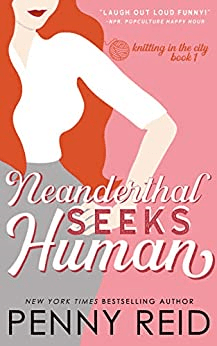
Neanderthal Seeks Human – Penny Reid

Okay it is embarrassing to admit how much I enjoyed this. I love all things cringey and romantic, but even for me this was a new level. The main character is a gorgeous (obviously, they always are) yet dorky woman who gets fired from her job in the first chapter, and the book follows here through all the ensuing romance and very theatrical plot (eye-rolling at some points). Although I liked reading it, it was admittedly pretty shallow, very slow and also extremely long, kind of written in a Mills and Boon style (yuck) but for some reason hundreds and hundreds of pages! I would recommend this as an easy read which will probably make you smile and laugh, but also cringe a LOT.

Why I’m no longer talking to white people about race – Reni Eddo-Lodge

A very interesting and eye-opening book about race relations in the UK. I would recommend this book to everyone – the author tells us about the black experience in the UK which is still a very much unspoken about topic. One part which stands out to me is when the author is explaining how our social systems are rigged against BAME people –Eddo-Lodge highlights with detail that at every stage of a black man’s life he is at disadvantage compared to his white male peers. This is a hugely powerful thing to understand and acknowledge, and I think that if more people read this one we could be a lot more aware of our own privileges in everyday life.

Eating Animals – Jonathan Safran Foer

As you might have gathered from all my other blog posts, I am very conscious of my own carbon footprint (you can read about my adventures through veganism here). My decision to no longer eat meat and to minimise dairy content considerably at first stemmed from health issues and from the knowledge of the emissions associated with animal farming. However, this book by Jonathan Safran Foer entrenched my desire to avoid all things animal-based through its harrowing and often disturbing portrayal of the conditions in which farmed animals must survive around the world. I would not say that I enjoyed reading this book – in fact it was very painful reading at some parts due to its violent descriptions – but it got the message across! I would recommend this to anyone who cares about diet and animals, or any staunch “our ancestors ate meat and so should we” believers… we all know at least one 😉

Atomic Habits – James Clear

I read this one after my boyfriend had read it and started a load of new habits to improve himself. At first, I thought this new book on productivity and self-improvement was a bit ridiculous as humans are not supposed to be machines whose only value is their output, however there were some useful tips and life stories in this book which can be applied to life in useful ways. For example, the concept of habit stacking (putting habits together so that doing one triggers the other), and of doing things in certain places/ at certain times is a useful thing to remember when trying to build new practices into your life.

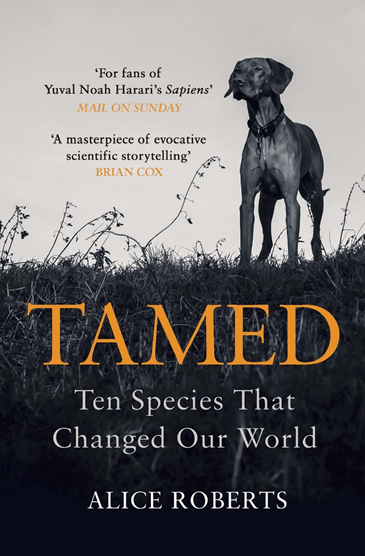
Tamed: Ten Species that Changed Our World – Alice Roberts Another non-fiction book – this time about natural history. Professor Alice Roberts takes us through human history with this one, and the key species we have domesticated through time which have got us where we are now. These include domesticating dogs from wolves and cattle from aurochsen, as well as the global journeys of apples, horses and rice.  I found this book an interesting but slow read, as in some places it can be quite technical (with genetics tied in throughout). I also thought that the format of the chapters was a bit repetitive, but that was probably to make the format more understandable to the reader.

Clan of the cave bear – Jean M Auel

Probably my favourite read of the year, Clan of the Cave Bear is the first in the hugely successful series about an orphaned human girl during the Last Ice Age, who is taken in by a clan of Neanderthals (human ancestors, which you can read more about here). This is another very long read but the world building was incredible, and the development of the characters kept me hooked right up until the end. I can’t believe how much the author must have researched to write this book – the detail is mind-blowing. I will definitely be reading the next books in the series in the new year!

Merry Christmas and a Happy New Year to all of you 🙂

Other posts by me:

Yellowstone Wolves as ecosystem engineers

Why should we bring back the beaver?

Badger Culling

RANDOM

How do zoos decide which animals to keep?

The World Association of Zoos and Aquariums (WAZA) boasts over 700 million visitors to its zoos each year – including London Zoo (UK), Calgary Zoo (Canada) and hundreds of other institutions around the world. This makes them a huge asset in raising awareness for the environmental threats that animals face, whilst also generating substantial funds for conservation projects. But zoos are also subject to much criticism for a variety of reasons, particularly around animal welfare concerns. This post will investigate these concerns and the priorities of zoos, and answer the question: how do zoos decide which animals to keep?

The aim of zoos

There are over 10,000 zoos worldwide, involved in both ex-situ (within the zoo) and in-situ (in the wider environment) conservation activities (Tribe & Booth, 2003). These include education programs, captive breeding, habitat restoration, species re-introduction and research (Tribe & Booth, 2003), and have led to many species’ success stories around the world. For example, the Golden Lion Tamarin Conservation Program in Brazil saw the size of the wild population of these primates increase by 20% over 10 years after successful captive breeding and reintroduction activities (Tribe & Booth, 2003). Another more well-known example is the huge restoration of Californian Condors: numbering just 22 in the early 1980s, intense captive breeding efforts took place across several zoos in the state. As a result of this, there are now over 500 individuals, with the 1000th chick born last year (Weston, 2019).

California condor - Wikipedia
Handsome beastie, the Californian Condor. Source: wikipedia

It is therefore established that the main aim of zoos is to promote conservation of animal species, populations and habitats (Palmer et al., 2017). But if this were the case, zoos would comprise of species which are highly threatened, and where there is some likelihood of successful reintroduction to the wild – but this is not always the case. With limited space, the need to make money through maintaining high visitor numbers and because of the range of conservation activities which can be undertaken, deciding which animals to keep at a zoo is tricky (Palmer et al., 2017). For example, is it worth focusing on large mammals which are not necessarily the most in need of protection, in order to maintain visitor numbers and funds? Or would it be better to keep smaller mammals, amphibians and invertebrates of high conservation value and which use less resources, at the cost of media attention?

 “Zoos must operate tactically by using their collections to best serve their own conservation goals. But these will vary, depending on what conservation values are prioritized. First among these criteria are “conservation status” and “extinction risk in the wild.” – Palmer et al. (2017)

Conservation value and animal welfare

Animal welfare is another key concern of zoos and must be balanced with conservation priorities. But the quality of life for animals isn’t prioritised in the same way as conservation is – if it was, we would not see elephants being kept in relatively small pens when they might roam 200km in a day in the wild. Other ethical issues of keeping animals in conditions vastly different to their natural habitats remain, as well as moral considerations – for example, does animal welfare matter for species with no obvious sentience (ability to feel pain)?

Some animals kept in zoo collections – particularly invertebrates – may not have a welfare, at least in the sense of having subjective experiences or preferences. It still makes sense to talk about them performing “natural behaviours”, but there’s a question whether this matters in animals lacking sentience.” – Palmer et al. (2017)

Compromises must be made between the competing aims of conserving species, population or genetic diversity, maintaining animal safety and the moral obligation to maintain a high level of animal welfare and quality of life (Kreger & Hutchins, 2010). Going back to the elephant example: is it worth keeping elephants in cramped conditions in zoos, for the funds that they raise for elephants in the wild? Some may say that this sacrifice of the individual for the benefit of others in the wild is an example of ecofascism, when others might think it’s appropriate to preserve the “greater good” (Palmer et al., 2017) – but the example demonstrates how contentious the issue can be.

Elephants Will Never Belong in Zoos
This elephant doesn’t look like it’s having much fun. Source: https://www.onegreenplanet.org/animalsandnature/why-life-in-a-zoo-is-no-life-for-an-elephant/

Charismatic mammals

Charismatic animals such as the elephant provide high “exhibit value” – this being the term to describe the power that an animal has in attracting visitors. It is widely believed that mammals with large body sizes are needed to attract visitors – in fact it has been found that an animal’s “beauty” and body size is a good predictor of whether it will be found in a zoo (Frynta et al., 2013). But in their detailed literature review on the topic, Palmer et al. (2017) found little evidence of significant negative impacts when zoos solely selected species ideal for direct conservation (rather than for charismatic value). Perhaps then it might be better in terms of both conservation and welfare to redirect focus from large mammals which require huge resources, towards the 183 less-known candidate species which receive very little resources but are still aesthetically pleasing for visitors (Smith et al., 2012).

The most effective strategy to combat the problem of limited space is without any doubt a shift away from the large charismatic mammals towards smaller species, particularly amphibians, invertebrates and some species of fish, which occupy less space, are relatively inexpensive to keep, have a high birth rate and are easy to reintroduce.” – Palmer et al. (2017)

Conclusion

In answer to the original question, zoos keep animals according to their conservation value, the degree of welfare and quality of life which can be maintained for them at the zoo, the financial and practical costs of keeping such animals and in some cases the charismatic appeal or popularity of species. Zoos remain an effective way of gathering public attention and funds and directing it towards conservation programs, but they must also exemplify high animal welfare standards, and refuse to keep animals which do not adapt well to confined conditions. One way through which this could be achieved would be to focus resources into smaller, less space and resource-intensive species of high conservation value, rather than keeping animals which cannot easily adapt to zoo conditions, and ensuring that animal welfare is prioritised alongside conservation.

Animal welfare belongs to each animal; it is not given to them. Zoos affect the degree of that welfare, but must balance it with their conservation objectives.” – Kreger & Hutchins, 2010

References

Frynta, D., Šimková, O., Lišková, S. & Landová, E. (2013) Mammalian collection on Noah’s ark: the effects of beauty, brain and body size. PloS one8(5), p.e63110.

Kreger, M.D. & Hutchins, M. (2010) Ethics of keeping mammals in zoos and aquariums. Wild mammals in captivity: Principles and techniques for zoo management, pp.3-10

Palmer, C., Kasperbauer, T.J. & Sandøe, P. (2017) Bears or butterflies? How should zoos make value-driven decisions about their collections? The Ark and Beyond: The Evolution of Zoo and Aquarium Conservation, pp. 179-191

Smith, R.J., Veríssimo, D., Isaac, N.J. & Jones, K.E. (2012) Identifying Cinderella species: uncovering mammals with conservation flagship appeal. Conservation Letters5(3), pp.205-212

Tribe, A. & Booth, R. (2003). Assessing the role of zoos in wildlife conservation. Human Dimensions of Wildlife8(1), pp.65-74.

Weston, P. (2019) Ten wildlife stories to sing about in 2019. [online] Available at: https://www.theguardian.com/environment/gallery/2019/dec/24/ten-wildlife-conservation-success-stories-2019-aoe (14/11/20)

Read more about…

Scottish wildcats and captivity

Yellowstone National Park

Mutualism in nature

Yellowstone: Wolves as ecosystem engineers

The effects of the reintroduction of wolves in Yellowstone National Park, USA, have been widely studied – the prolonged absence and then reintroduction of wolves at the top of the food chain makes this case study a great natural experiment into ecosystem dynamics. This post will collate the interesting bits from the research, and look at the public perceptions of such a reintroduction, to see if it could be done elsewhere.

Predation and Competition

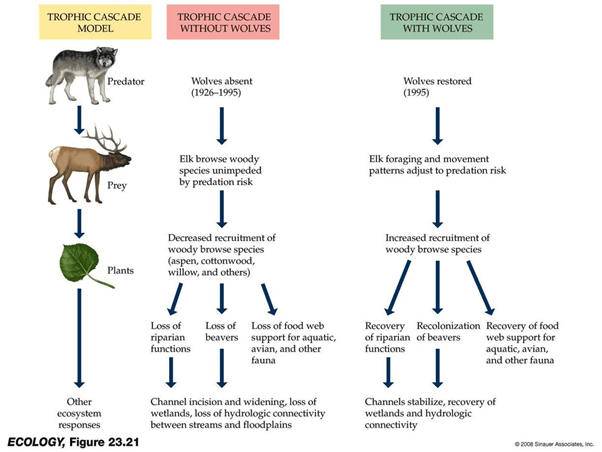
 Grey wolves (Canis lupis) were completely removed from Yellowstone National Park, northwest USA during the mid-1920s, until being re-introduced in 1995-1996 (Ripple & Beschta, 2012). In the 70 years without wolves, populations of elk and bison thrived, whilst vegetation was far less common due to unregulated grazing. The simplest food web to visualise this would have wolves at the top, bison and elk below, then vegetation such as aspen, willows and cottonwoods at the bottom (Ripple & Beschta, 2012):

A simplified food web to illustrate wolves at the top predators, and how they can affect vegetation and the surrounding ecosystem. Source: www.studyblue.com

Browsing (tree eating) across the north of Yellowstone National Park was at 100% in 1998, shortly after wolf reintroduction – but by 2010, it had reduced to 25% in upland areas and 10% in riparian (riverside) areas (Ripple & Beschta, 2012). This reduction was due to the wolves controlling the population of deer, which allowed the growth of aspen and other plants to be restored. In turn, this allowed beaver and bison populations to increase, with an increase in vegetation reducing the need for competition between species.

 “During the seven-decade wolf-free period, the collapse of a tri-trophic cascade allowed elk to significantly impact wildlife habitat, soils, and woody plants. For example, species such as aspen and willows were generally unable to successfully recruit young stems.” – Ripple & Beschta, 2012

The reintroduction of wolves also changed the distribution of elk across the park, whose new priority was to avoid getting eaten. In fact, since the reintroduction of wolves bison and elk have changed their foraging behaviour, often reducing foraging time in exchange for increased vigilance (Laundré, Hernández & Altendorf, 2001). Because wolves so effectively control elk population, culling seen from the 1920s-1960s is no longer required (Beschta & Ripple, 2016). As well as direct predation, wolves affect other large mammals through competition: since the reintroduction of wolves, a reduction in coyotes has also been recorded. This has increased the number and diversity of small mammals, which has benefitted birds and other mammals like badgers and red foxes (Ripple & Beschta, 2012).

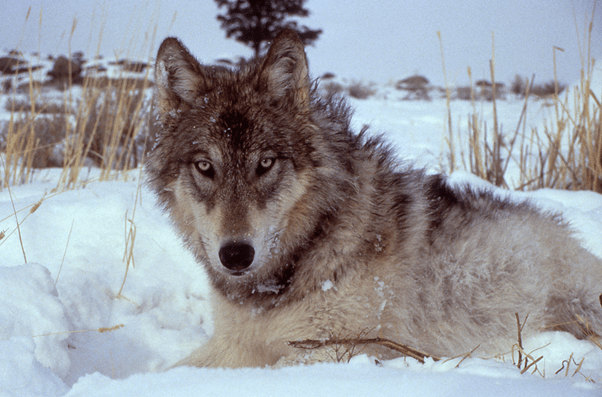
Grey wolf, Canis lupis. Source: wikipedia

Improving habitat quality

The restoration of plants has greatly benefitted those reliant on the habitat they provide. For example, songbird richness has greatly increased across Northern areas of Yellowstone (Ripple & Beschta, 2012), and the number of beaver colonies has increased from 1 in 1996 to 12 in 2009 (Ripple & Beschta, 2012). Beavers are good news for rivers: they reduce streambank erosion, improve nutrient cycling and improve both vegetation and animal biodiversity within the rivers themselves (Beschta & Ripple, 2016). For example, streams with beaver ponds in Wyoming had 75x the amount of wildfowl than those without dams (Ripple & Beschta, 2012).

In the first two decades following the 1995–1996 reintroduction of wolves, all but two of the 24 northern range studies of deciduous woody species found young woody plants increasing in size or frequency.” – Beschta & Ripple, 2016

Public Perception

Before wolves were reintroduced to Yellowstone, most people (from a survey of over 1000 visitors) favoured the return of wolves, with 80% agreeing that wolves had a place in modern-day Yellowstone, and over 70% agreeing that wolves would help maintain balanced wildlife in the park (McNaught, 1985).However, there were still concerns from some concerning the safety of people and of livestock, and on the high cost of the reintroduction.

A study conducted much after the reintroduction of wolves found that these concerns were actually unfounded: Duffield, Neher & Patterson (2008) estimated that the annual number of visitors to the region increased by 1.5% in the spring and 5% in autumn directly because of the presence of wolves – people who go to Yellowstone specifically to see wolves spend $35.5 million every year.

The evidence from Yellowstone points to the potentially widespread ecological and economic success that controlled reintroduction of large mammals can have on an area. But could it happen anywhere else? In the Scottish Highlands, wolves were almost completely wiped out by 1769, allowing deer populations to get out of hand. The Highlands have been assessed as a potential location for reintroduction in the UK, since the human population there is low, and the wolves’ main prey would be deer (Landon, 2020). And though some concerns have been voiced about predation on livestock, general public opinion seems to be favourable. So perhaps wolves might be seen around the UK a lot more frequently soon….

Results from Yellowstone, other areas in western North America, and around the world increasingly point to a need for recovering ecologically effective populations of large predators to help recover or maintain biodiversity in ungulate populated landscapes” – Beschta & Ripple, 2016

References

Beschta, R.L.& Ripple, W.J. (2016) Riparian vegetation recovery in Yellowstone: the first two decades after wolf reintroduction. Biological Conservation198, pp.93-103

Duffield, J.W., Neher, C.J.& Patterson, D.A. (2008) Wolf recovery in Yellowstone: park visitor attitudes, expenditures, and economic impacts. The George Wright Forum, Vol. 25, No. 1, pp. 13-19

Landon, R. (2020) Exploring the Possibility of Reintroducing Wolves to the Scottish Highlands as a means of Ecological Conservation. The Irvine Atlas, p.71

Laundré, J.W., Hernández, L. & Altendorf, K.B. (2001) Wolves, elk, and bison: reestablishing the” landscape of fear” in Yellowstone National Park, USA. Canadian Journal of Zoology79(8), pp.1401-1409

McNaught, D.A. (1985) Park visitors attitudes towards wolf recovery in Yellowstone National Park

Ripple, W.J. & Beschta, R.L. (2012) Trophic cascades in Yellowstone: the first 15 years after wolf reintroduction. Biological Conservation145(1), pp.205-213

Learn more about…

Beaver rewilding

Badgers

Scottish Wildcats

Pleistocene Rewilding

RANDOM!

Extinction Rebellion and the Climate Emergency

(Okay, so technically this does not begin with X for my alphabet…. but it still counts when abbreviated to XR, right?!)…

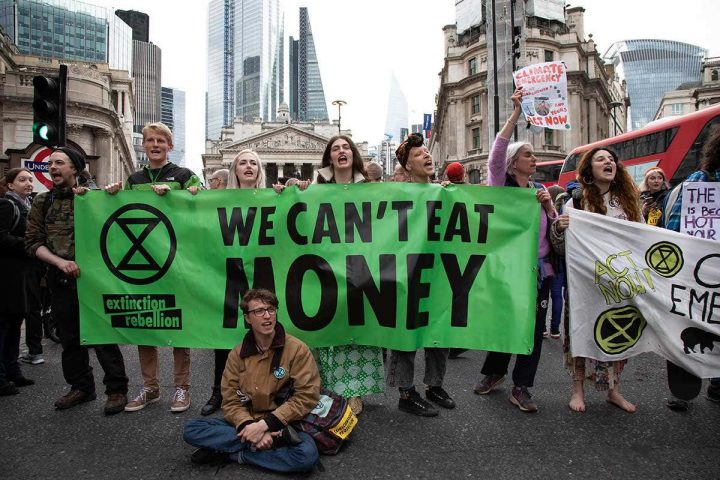
Extinction Rebellion - Wikipedia

History suggests that governments will only take action if there is intense pressure to do so (Gunningham, 2019). In 2018, the Intergovernmental Panel on Climate Change warned us that we have only 12 years to avoid a climate catastrophe – and with a lack of clear and revolutionary action from our leaders, Extinction Rebellion arrived on the scene to add pressure and raise awareness of the climate emergency we face (Gunningham, 2019).

Extinction Rebellion (XR) launched in 2018, and quickly made a name for itself through acts of non-violent civil disobedience in cities across the UK – these included the huge ‘April Uprising’ disruption across London, where approximately 6000 protestors blocked five major bridges and superglued themselves to trains and buildings (Gunningham, 2019). This period of protesting gained them 40,000 new members around the world, and was replicated across 80 cities worldwide (Ginanjar & Mubarrok, 2020). Since then, XR has spread across 45 countries, demanding that (1) governments tell the truth about the climate crisis, (2) they reduce greenhouse gases to net zero by 2025 and (3) they create citizen’s assemblies on climate and ecological justice.

Extinction Rebellion encourages institutional evolution in climate related global governance from the political elite to citizen assembly. What this means is that Extinction Rebellion is trying to change the traditional policy-making process to the participation of the public.” – Ginanjar & Mubarrok (2020)

One of the key points seen as vital to the success of the XR’s protest movement, is the so-called “3.5% rule”. Research has shown that non-violent campaigns against autocratic regimes and military forces are generally successful when 3.5% of the population is mobilised in sustained protests (Chenoweth & Stephan, 2011). XR uses this research to recruit new protestors, suggesting that once this amount of people has been mobilised, their goals will be met. However, this has been criticised recently as being an inappropriate figure, since the 3.5% found in the study to be successful was only successful under certain contexts, like under autocratic governments, rather than democratic governments like that of the UK and Australia (Matthews, 2020).

But one thing that is rarely criticised is XR’s non-violent approach. According to the same research by Chenoweth and Stephan (2011), non-violent social change is twice as likely to be successful as violent protest movements, with a 70% success rate achieved in the early 2000s. Non-violent campaigns are far easier to get behind, which may explain some of XR’s membership success. Their focus on regenerative culture also promotes membership, through prioritising individual wellbeing to achieve a collective wellbeing (Westwell & Bunting, 2020). In this way, XR tries to prevent protestor burnout and promotes physical and mental health, which is essential when dealing with as catastrophic a problem as climate change.

Within XR there is an explicit attempt to develop a cohesive internal culture, built on an ethics of care, termed ‘regenerative culture’. Broadly speaking ‘regenerative culture’ can be understood as an evolving concept that challenges the ‘fundamentally uncaring and destructive’ relations of modern western society” – Westwell & Bunting, 2020

The actions of Extinction Rebellion, alongside the rise of Greta Thunberg and the School Strike for Climate have brought climate change to public and media attention. Councils across the world have declared a “climate emergency”, with 90% of people living in Britain now living somewhere where a climate emergency has been declared (climateemergencydeclaration.org). By doing so, councils commit themselves to serious action on the issue, both in terms of council buildings and activity, but also through policy making for the wider public. Yet serious problems remain in the push for climate action – though 78% of councils are aiming for net zero carbon emissions by 2050, 47% have no strategy in place to achieve this (Dudman, 2020).

If You’re Not Busy Plotting Nonviolent Revolution for Peace and Climate, You’re Busy Dying
Source: https://www.pressenza.com/2019/12/if-youre-not-busy-plotting-nonviolent-revolution-for-peace-and-climate-youre-busy-dying/

The success of extinction rebellion can only be measured in the tangible actions of the governments and wider society they pressurise. So far, we have more commitments from our leaders to climate action (though not necessarily backed by action), and better awareness of what is at stake. But I remain sceptical that our governments will hit zero net carbon by 2050, let alone by 2025.

References

Dudman, J. (2020) English councils set to miss carbon emissions targets. [online] Available at: https://www.theguardian.com/society/2020/jan/27/english-councils-set-to-miss-carbon-emission-targets (Accessed: 23/10/2020).

Ginanjar, W.R. & Mubarrok, A.Z. (2020) Civil Society and Global Governance: The Indirect Participation of Extinction Rebellion in Global Governance on Climate Change. Journal of Contemporary Governance and Public Policy1(1), pp.41-52

Gunningham, N. (2019) Averting climate catastrophe: environmental activism, Extinction Rebellion and coalitions of Influence. King’s Law Journal30(2), pp.194-202

Matthews, K.R. (2020) Social movements and the (mis) use of research: Extinction Rebellion and the 3.5% rule. Interface: A Journal on Social Movements12(1)

Westwell, E. & Bunting, J. (2020) The regenerative culture of Extinction Rebellion: self-care, people care, planet care. Environmental Politics29(3), pp.546-551

Read more about…

Overpopulation and overconsumption

Beavers

Badger Culling

…. SURPRISE ME

Wangari Maathai: Building change by planting trees

Nobel prize winner, environmentalist, and professor Wangari Maathai created the “Green Belt Movement”, an initiative to prevent environmental degradation linked to commercial deforestation across Kenya. During the 1970s and onwards, colonial and post-colonial pressures forced Kenyan farmers to grow cash crops such as tea and coffee for the foreign market, rather than the traditional crops they had been growing to support their communities (Gorsevski, 2012; Maathai, 2003). To make space for such agricultural production, large swathes of forest were destroyed, devastating the rural communities dependant on locally produced food, firewood from the forests and clean water from the rivers, which were now being polluted by agricultural runoff.

These changes inspired Maathai to set up the “Green Belt Movement” in 1977, engaging women across Africa to plant trees (Gorsevski, 2012). It’s focus on women was vital, considering that it was women, in their traditional role as homemaker, who were disproportionately affected by these environmental changes (Muthuki, 2006). Through getting involved in the Green Belt Movement,  women improved their access to essential foods and firewood – but also became self-sufficient, independent, and able to earn their own income. In fact, by the early 2000s, six thousand tree nurseries, created and run by women, had been set up across Africa, employing over 100,000 people (Maathai, 2003).

Wangari Maathai - Wikipedia
Wangari Maathai: the first women in East Central Africa to earn a doctoral degree, the first African women and the first environmentalist to win the Nobel Peace Prize. (Gorsevski, 2012). Source: wikipedia

Maathai’s incessant determination to improve the lives of women across Africa saw the Green Belt Movement form another association, the Women for Change program. Since being set up in 2003, the charity has developed a huge range of ways to tackle poverty within Kenya, through the education of women on topics including sexual health and finance, to offering micro-loans to support small businesses (womenforchangeorganization.org). It has also trained women in profitable skills such as bee-keeping, and provided tuition to young girls to continue their academic pursuits (Maathai, 2003).

Through setting up the Green Belt Movement, as well as through her political advocacy and protesting, Maathai challenged the traditional patriarchal society in which she was living, empowered millions of women and demonstrated how environmental sustainability can be a pathway to peace:

“In awarding Maathai the Nobel peace prize, the Norwegian Nobel Committee acknowledged connections between peace, environmentalism, democracy, sustainable development and the importance of human rights, particularly women’s rights, in international politics” – Muthuki, 2006

Through encouraging cooperation rather than competition, and by highlighting the links between social and economic issues with environmental solutions, her programs brought widespread attention to sustainability, and to the opportunities which arise when women are given equal status to men. Her life and career was fraught with protests, governmental oppression and violence – but her resilience and passion led to the development of a range of enormous associations working to improve lives across Africa today. By 2005, over 15 African countries had joined up with the Green Belt Movement and over 51 million trees have been planted (greenbeltmovement.org).

Today we are faced with a challenge that calls for a shift in our thinking, so that humanity stops threatening its life-support system. We are called to assist the Earth to heal her wounds and in the process heal our own – indeed to embrace the whole of creation in all its diversity, beauty and wonder. Recognizing that sustainable development, democracy and peace are indivisible is an idea whose time has come” – Wangari Maathai

Wangari Maathai was a remarkable woman: Read more about her projects and biography below…

Wangari Maathai Institute for Peace and Environmental Studies

Green Belt Movement

Women for Change

References

Gorsevski, E.W. (2012) Wangari Maathai’s emplaced rhetoric: Greening global peacebuilding. Environmental Communication: A Journal of Nature and Culture6(3), pp.290-307

Maathai, W. (2003) The Green Belt Movement: Sharing the approach and the experience. Lantern Books

Muthuki, J. (2006) Challenging patriarchal structures: Wangari Maathai and the Green Belt movement in Kenya. Agenda20(69), pp.83-91

Read more about…

Conservation

Gender and environment

Conservation vs. food production

Viruses: how particles in our poo are making us sick

When human sewage gets into our water systems, it can have disastrous effects on health. The 1955-1956 outbreak of hepatitis in New Delhi due to contamination of the Jumna River was one of the first instances which led scientists to link human health with sewage contaminated water (Bosch, 1998). Since then, research has found over 150 virus species which can cause illnesses such as hepatitis, gastroenteritis, meningitis, fever, conjunctivitis and rashes (Bosch, 1998; Farkas et al., 2020) – in Rio de Janeiro’s coastal waters, 96% of samples contained at least one type of virus (Staggemeier et al., 2017).

Fecal pollution of recreational waters remains a significant public health issue, especially in developing countries.” – Staggemeier et al. 2017

These viruses enter the water systems through the discharge of sewage-contaminated water, surface runoff, waste from slaughterhouses and industrial activities (Staggemeier et al., 2017). Viruses are present in high concentrations in sewage, as a person suffering from gastroenteritis can excrete 105-1011 virus particles per gram of stool (Bosch, 1998). This can quickly spread viruses when we are exposed to this contaminated water, through drinking or swimming in it, eating foods which have been fertilised with it or most notably through eating shellfish, which concentrate viruses and bacteria in their flesh (Bosch, 1998).

The survival time of a virus is extremely important in determining the danger it poses – the longer it can survive outside a host (a sick person), the more likely it is that someone else will become exposed to it (Rzezutka & Cook, 2004). A fascinating study by Rzezutka and Cook (2004) looked at the virus particles in a variety of situations, finding that their survival is most affected by heat, pH and moisture. When looking at foods which had been fertilised with contaminated water, they found that uncovered vegetables had lower virus present on their skins than covered; viruses survived for longer on tomatoes and spinach than cabbage because of their smoother skin; and pasteurised milk could contain poliovirus particles for 90 days when stored at 4 degrees C (Rzezutka & Cook, 2004).

“Once on foodstuffs such as vegetables, viruses may persist under normal storage conditions over the times usual between purchase and consumption.” – Rzezutka & Cook, 2004

Though this information is alarming, new technologies in water treatment processing could hold the answer to reducing contamination. UV disinfection is used widely to inactivate microorganisms before water is released from the treatment plant (Qui et al., 2018). It works by damaging the DNA of the virus, which prevents particles replicating and spreading, which not only reduces the presence of the virus in the water initially, but also prevents recovery of the virus on the surface. UV disinfection also has benefits as no chemicals need to be added to the water, as is done with chlorination (adding chlorine) (Qui et al., 2018).

Look familiar? A virus particle for the currently widespread coronavirus COVID-19.

 But contaminated waste is proving to be surprisingly useful – scientists around the world are finding coronavirus particles in sewage, which could be used to estimate infection rate in a community, or even predict the number of people suffering from it (Fegan, 2020, Mandal, 2020). Though this is done through making estimates, it could provide useful in assessing the infection rates of an area where other techniques such as testing and tracing are proving less successful.

References

Bosch, A. (1998) Human enteric viruses in the water environment: a minireview. Int Microbiol1(3), pp.191-6

Farkas, K., Mannion, F., Hillary, L.S., Malham, S.K. & Walker, D.I. (2020) Emerging technologies for the rapid detection of enteric viruses in the aquatic environment. Current Opinion in Environmental Science & Health16, pp.1-6

Fegan, C. (2020) Rising levels of virus in sewage could be early warning of surge [online] Available at: https://www.independent.ie/world-news/coronavirus/rising-levels-of-virus-in-sewage-could-be-early-warning-of-surge-39571218.html (Accessed: 15/10/2020)

Mandal, A. (2020) Wastewater analysis predicts COVID-19 spread [online] Available at: https://www.news-medical.net/news/20200922/Wastewater-analysis-predicts-COVID-19-spread.aspx (Accessed: 15/10/2020)

Qiu, Y., Li, Q., Lee, B.E., Ruecker, N.J., Neumann, N.F., Ashbolt, N.J. & Pang, X. (2018) UV inactivation of human infectious viruses at two full-scale wastewater treatment plants in Canada. Water research147, pp.73-81

Rzeżutka, A. & Cook, N. (2004) Survival of human enteric viruses in the environment and food. FEMS microbiology reviews28(4), pp.441-453

Staggemeier, R., Heck, T.M., Demoliner, M., Ritzel, R.G., Röhnelt, N.M., Girardi, V., Venker, C.A. & Spilki, F.R. (2017) Enteric viruses and adenovirus diversity in waters from 2016 Olympic venues. Science of the Total Environment586, pp.304-312

Read more about…

Overpopulation and overconsumption

Human evolution

All posts about food!

Urban greening: make our cities green again!

55% of the world’s population now live in urban areas – in Europe, that number soars to almost 75% (The World Bank, 2020). These cities can be extremely densely packed, making green spaces difficult to preserve, and even harder to squeeze into established areas (Haaland & van Den Bosch, 2015). When gardens, parks and fields are replaced with more housing, the loss of green space is not made up for elsewhere – with increased urban densification (high population in a small area), green space is often the first casualty (Haaland & van Den Bosch, 2015). This post will look at why green space is important, but why creating more is not always as simple as just planting trees along a road.

Examples of urban green spaces include parks, forests, green roofs on buildings, community gardens, urban trees and even the vertical application of turf (Haaland & van Den Bosch, 2015; Cameron et al., 2012). As you might expect, these areas and features can provide a range of benefits to both local biodiversity and human health – from filtering air, providing food and cooling temperatures, to improving the local bird species diversity and reducing habitat fragmentation (Tzoulas et al., 2007). In fact, it was found that for the UK city of Manchester, a 10% in green spaces would negate the 4 degree C increase in temperature predicted by 2090 (Cameron et al., 2012).

Based on a study of five major UK cities, if 20% of the population within 2 km of an 8–20 ha green space used that space to reach a target of 30 min activity on 5 days a week, the saving to the UK’s National Health Service would be more than £1.8 million (€2.7 million) a year.” – Tzoulas et al. 2012

Southampton Common, an example of a park in the centre of the city.

But creating urban green space is not as easy as you might think. There are a range of social, cultural and economic factors to consider when building a green network in a city. The first question to ask yourself might be, “what kind of green space do we want to create?” Research has found that though green space like parks can make healthier neighbourhoods, they also increase house prices, which can lead to property becoming unavailable for the people who need it in the area (Wolch et al., 2014). For example, when New York’s High Line, a disused train line now completely covered in plants, was created, it led to property values within the region increasing by 103% between 2003 and 2011 (Wolch et al., 2014). These changes are evidence of a process of “ecological gentrification”, whereby the infrastructure and affordability of an area is impacted to the point where local people are disadvantaged (Wolch et al., 2014).

In many countries, inner cities are home to a large proportion of people of colour and low-income earners (Wolch et al., 2014). In US cities for example, it is these people most likely to be affected by ecological gentrification, since wealthier (predominantly white) households tend to live on the outskirts (Wolch et al., 2014). Low-income earners already have less access to green space than more affluent communities (Aronson et al., 2017), and are more likely to be affected by inner city infrastructure changes. This theory has been shown in a number of examples – in some towns of the Eastern Cape, South Africa, street trees are more diverse in wealthier neighbourhoods, and in Phoenix, Arizona, wealthier neighbourhoods support the largest number of lizard species (Aronson et al., 2017). Clearly, wealth and race influences access to biodiversity.

Negative relationships among biodiversity, access to green space, and occurrence of racial minorities have been documented in both northern and southern hemisphere cities, primarily driven by socioeconomics and segregation legacies” – Aronson et al. 2017

Management of current green spaces is another issue for consideration. An increase in gardens for example, might be associated with improved food provision, carbon offsetting or biodiversity gains. But it could equally be tied to an increase in fertiliser and pesticide use, invasive ornamental species and increased water consumption (Cameron et al., 2012). Common management practices such as pruning, removal of leaf litter (dead leaves) and growing turf lawns instead of woodlands could do more harm than good on an environmental level (Aronson et al., 2017). And when management is not coordinated across areas, the full biodiversity benefits of management activities cannot be gained – For example in Chicago, USA, collective wildlife-friendly management across many individual gardens had a far greater benefit on native bird population, compared to single gardens considered alone (Aronson et al., 2017).

Solutions

Aronson et al. (2017) suggested the first steps in improving urban biodiversity are to improve what is already present in urban areas, through enhancing biodiversity and coordinated management. And to mitigate ecological gentrification, a “just green enough” approach has been suggested – this is a way which puts the concerns of local communities central to the planning process, rather than prioritising the ecology or aesthetics of an area (Wolch et al., 2014). Focusing on smaller projects is also more likely to benefit local people, since it avoids the creation of large features that property developers could capitalise on. There is evidence that urban green spaces can improve city life – in the “Garden City” of China, Hangzhou, dilapidated factories, canals and other neglected areas have been transformed to green spaces, leading to temperature reductions of 4-6oC in some parts of the city (Wolch et al., 2014). Green infrastructure presents a huge opportunity for urban developers to improve millions of lives – I remain hopeful that our cities will be a lot greener in the future.

Hangzhou, China. Trees are planted along the sides of busy roads in an attempt to make busy areas greener. Source: wikipedia.org

References

Aronson, M.F., Lepczyk, C.A., Evans, K.L., Goddard, M.A., Lerman, S.B., MacIvor, J.S., Nilon, C.H. & Vargo, T. (2017) Biodiversity in the city: key challenges for urban green space management. Frontiers in Ecology and the Environment15(4), pp.189-196

Cameron, R.W., Blanuša, T., Taylor, J.E., Salisbury, A., Halstead, A.J., Henricot, B. & Thompson, K. (2012) The domestic garden–Its contribution to urban green infrastructure. Urban forestry & urban greening11(2), pp.129-137

Haaland, C. & van Den Bosch, C.K. (2015) Challenges and strategies for urban green-space planning in cities undergoing densification: A review. Urban forestry & urban greening14(4), pp.760-771.

The World Bank (2020) Urban Population. [online] Available at: https://data.worldbank.org/indicator/SP.URB.TOTL.IN.ZS (Accessed: 07/10/2020)

Tzoulas, K., Korpela, K., Venn, S., Yli-Pelkonen, V., Kaźmierczak, A., Niemela, J. & James, P. (2007) Promoting ecosystem and human health in urban areas using Green Infrastructure: A literature review. Landscape and urban planning81(3), pp.167-178

Wolch, J.R., Byrne, J. & Newell, J.P. (2014) Urban green space, public health, and environmental justice: The challenge of making cities ‘just green enough’. Landscape and urban planning125, pp.234-244

Learn more about…

Ancient woodlands

Conservation vs food production

All conservation topics!

Design a site like this with WordPress.com
Get started