News: Tiktok, tuna and the world’s largest bee

This post is just a brief one highlighting some of the top, positive, environmental news from September 2020. Enjoy. Tiktok Millennials (born between 1980 and 2000) and Generation Z (late 90s- 2010s) are becoming increasingly more aware of environmental issues by using the Internet, with one notable example being the video-sharing platform Tiktok. Many users …

Seasonal eating: what’s the point?

Today we are back with my most favourite topic: FOOD! This post is going to look at seasonal and local produce,  our perceptions of what is “seasonal” and whether eating with the seasons is better for the environment. Enjoy! Our supermarkets today allow us to purchase food products from all over the world. This incorporates …

REDD+: How effective are carbon offsetting schemes?

How effective are REDD+ incentives for carbon offsetting? This post will take a look at the complex effects that paying for carbon in trees can have on the economy and the community.

Smart Shorts III: Can eating Quorn help you save the planet?

Have you ever sat down for dinner, started tucking into a Quorn lasagne, escalope or the best of the best (in my opinion) the Quorn nugget, and wondered to yourself… What is this? Well, I have! So to answer my own question (and hopefully satisfy your curiosity too), this blog post will cover what Quorn …

Palaeoecology: how an understanding of ancient savannas helps inform elephant management

Despite their role as a conservation flagship species, elephants can be highly destructive to their natural environment. They play a huge role in the management of savanna ecosystems across Africa, but in some areas, the widespread damage they bring to vegetation and farmer’s land makes them a pest. Two main control methods have been suggested …

Which is the real problem: Overpopulation or Overconsumption?

In 2015, 141 million people were born – 44 million more than was recorded 65 years earlier (Ritchie, 2019).  Our current population stands at over 7 billion, and could reach 9 billion by 2050. This puts a lot of strain on our planet’s resources, and leads many to believe that with fewer mouths to feed, …

What has Boris got against newts?!

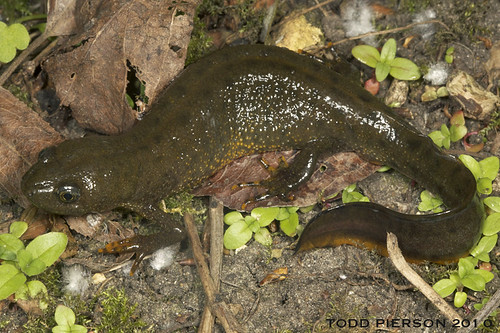
Last month (July 2020) the UK prime minister Boris Johnson said the following words: “Time is money. And the newt-counting delays in our system are a massive drag on the productivity and prosperity of this country.” …What’s that all about? What are newt-counting delays, and how are newts linked with societal productivity and prosperity? This …

Mutualism in nature: Fungal friends and finding Nemo

Mutualism is the technical term used to describe a relationship between organisms from which both parties benefit. For example, bees benefit from the nectar provided by flowers, when the flowers themselves are pollinated by the spread of their pollen to other flowers. It differs from symbiosis, a word which is often used alongside mutualism, as …

Land sharing or land sparing? Conservation vs food production

The land-sharing land-sparing framework (LSLS) addresses the issue of providing food for an ever-growing population, whilst maintaining or improving biodiversity (Kremen, 2015). The first of the two ideas is land-sharing, which combines conservation and wildlife-friendly farming practices within the same area of agricultural land (Phalan et al., 2001). England’s Environmental Stewardship policy promotes this strategy …

Knocking out Knotweed: Nature’s weapons

I am sure that a lot of you already know of knotweed – it is the big baddie of the invasive species, as its ability to dominate environments, by killing off and inhibiting the growth and reproduction of other plants (Clements et al., 2016), and by changing the soil chemistry to the benefit of invaders …

Design a site like this with WordPress.com
Get started