

Indigenous communities tend to be best connected to the natural world. They have played a relatively tiny part in emitting anthropogenic greenhouse gases in comparison with Western societies like US and Europe (Green & Raygorodetsky, 2010). Yet the impacts of climate change fall disproportionately on Native people, like those living in the Arctic, in areas …
Author Archives: avleveri
Indigenous knowledge: the quest for solutions to environmental problems
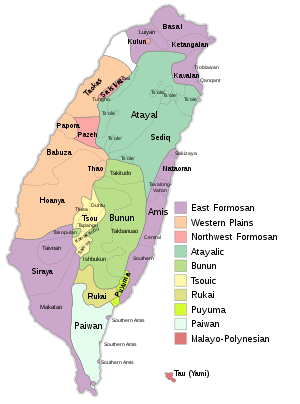
Indigenous people, also known as First Nations, Aboriginal or Native peoples are ethnic groups who lived in an area before it was included in a nation state – examples include the Inuit peoples of Greenland, the Samoans, the Maori of New Zealand and the Chukchi peoples of Russia. This post will discuss the controversial topic …
Continue reading “Indigenous knowledge: the quest for solutions to environmental problems”
Homo sapiens: How did we get here?

Modern humans, or Homo sapiens, are the only species of human living on the planet. But this wasn’t always the case – it’s been a long evolutionary journey to get to where we are now, from our early hominid ancestors the Australopithecines to the big-brained, flat-faced people we are now. This post will look at …
Gender biases: Mother nature and the macho man

This post was going to be G for Greta Thunberg. But as usual, I fell down multiple rabbit holes until deciding to instead focus on G for gender, and how it can be a bias in environmental issues. Hope you enjoy! Most research literature on the topic of gender and environmental issues focuses on women. …
Continue reading “Gender biases: Mother nature and the macho man”
Fishing down the food web – what is it and why does it matter?

A popular idea in marine conservation and fisheries management is that of “fishing down the food web”, first coined in a paper by Pauly et al. (2000). The phrase describes the observation that the average catch from global fisheries in 2000 was of a lower average trophic level than over the last 50 years prior. …
Continue reading “Fishing down the food web – what is it and why does it matter?”
Ecotourism: Is it as ‘green’ as it claims to be?
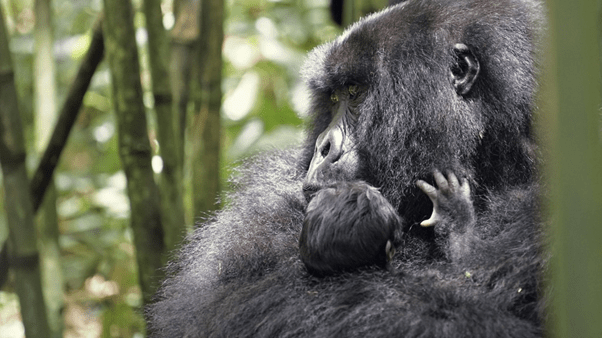
Ecotourism has been defined as the “responsible travel to natural areas which conserves the environment and improves the welfare of local people” (The International Ecotourism Society). The term arose in the 1980s to highlight the connection between conservation and tourism, and the benefits that one can have on the other (Stronza et al., 2019). But …
Continue reading “Ecotourism: Is it as ‘green’ as it claims to be?”
Dairy, developments and GM cows

The global dairy industry is a huge one. The EU, US and New Zealand account for almost half of global dairy production, and the largest 13 dairy corporations emit as much greenhouse gases as 6.9 million passenger cars generate in a year (Sharma, 2020). Because it is so colossal, sustainability issues are plentiful within the …
Captivity: Conservation of Scottish Wildcats
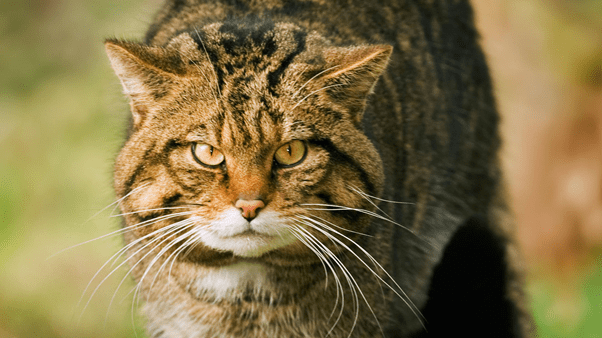
The Scottish Wildcat* (Felis silvestris grampia) represents the last surviving wild member of the cat family in Britain (Fredriksen, 2016). It is a famously elusive and untameable species (Gartner et al., 2014), which resembles the domestic tabby cat, with a large black-tipped bushy tail. It is among the most endangered species in Britain, with under …
Continue reading “Captivity: Conservation of Scottish Wildcats”
Badger Culling

Badgers are charismatic, black-and-white striped mammals which share their scientific family with otters, weasels and ferrets, and are protected in the UK under the Protection of Badgers Act 1992 (Bennett & Willis, 2008). They live in underground setts, some of which have been found to extend from 20-100m or more, with the largest in the …
Anthropocene

Today is the first day in what I am referring to as my “Alphabet”, which will feature an environmental/social issue for every letter (Z and Q remain a struggle so let me know if you have any ideas!) So, A is for Anthropocene. “Anthropocene” is the term used by many to describe the new geological …
 Search for Science